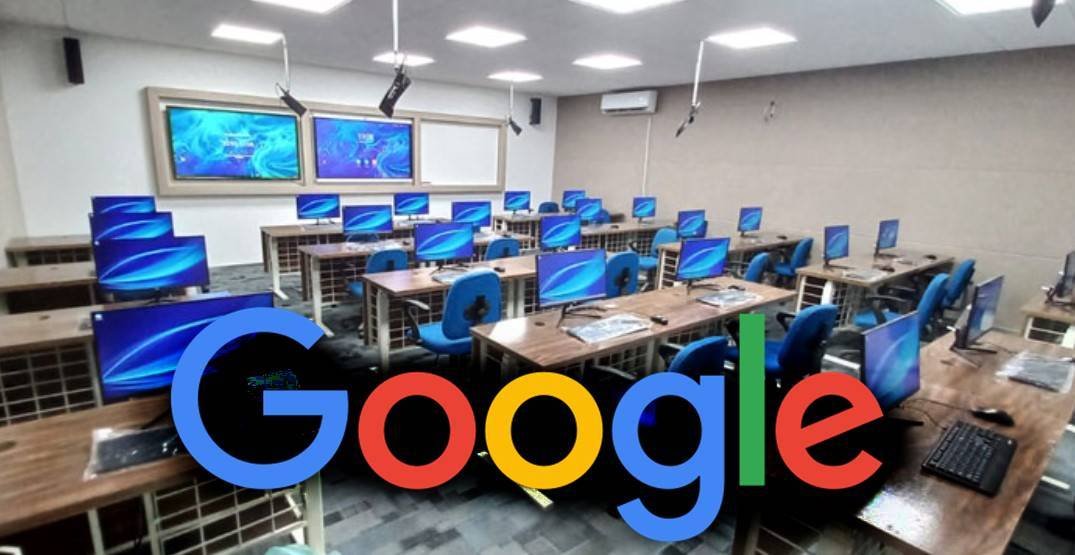
The classroom of today would be unrecognizable to educators from just two decades ago. Smart boards have replaced chalkboards. Tablets supplement textbooks. Cloud platforms host assignments that once traveled home in backpacks. But the smart school revolution goes far deeper than visible technology it represents a fundamental reimagining of how educational institutions function, learn, and evolve.
Smart schools aren’t simply schools with technology. They’re learning organizations where data informs decisions, systems integrate seamlessly, and technology amplifies human capability rather than replacing it. We’re witnessing the most significant transformation in educational infrastructure since the introduction of public schooling itself.
Defining the Smart School
Beyond Gadgets: What “Smart” Really Means
Smart schools leverage technology to create responsive, data-driven, and continuously improving educational environments. They use interconnected systems that communicate, adapt, and provide insights. Technology isn’t an add-on; it’s woven into the institutional fabric, enabling capabilities impossible in traditional settings.
These institutions make decisions based on evidence rather than intuition, personalize learning at scale, operate with unprecedented efficiency, and adapt rapidly to changing needs. The “smart” in smart schools refers less to the technology itself and more to the intelligence that technology enables.
The Problem: Traditional Schools Can’t Meet Modern Needs
Industrial Age Education in the Information Age
Traditional schools were designed for industrial society standardized instruction, age-based cohorts, fixed schedules, and one-size-fits-all approaches. These models served their era well, but increasingly fail modern students.
Today’s world demands creativity, adaptability, critical thinking, and technological literacy. Jobs require continuous learning and complex problem-solving. Yet many schools still operate on century-old models where students passively receive standardized instruction, memorize for tests, and move through rigid grade levels regardless of actual mastery.
The Scaling Problem
Traditional personalized education requires unsustainable teacher-student ratios. Schools can either serve many students with standardized approaches or few students with individualized attention. This impossible choice has limited educational quality for generations. Smart schools break this constraint; technology enables personalization at scale.
Core Technologies Driving the Smart School Revolution
Learning Management Systems: The Digital Classroom Foundation
Cloud-based learning management systems create virtual learning environments, extending education beyond physical classrooms. Students access materials anytime, anywhere. Teachers distribute resources, collect assignments, and provide feedback digitally. Learning becomes continuous rather than confined to school hours.
These platforms also generate data that challenge students most, such as how long learners spend on activities, and which resources students access repeatedly. This information guides instructional improvement in ways impossible when learning happened exclusively on paper.
Student Information Systems: The Institutional Brain
Comprehensive student information systems integrate academic records, attendance data, behavior documentation, health information, and family details into unified profiles. This integration enables holistic student understanding and coordinated support.
When counselors, teachers, administrators, and support staff all have access to current, comprehensive student information, collaboration improves dramatically. The student who’s struggling academically, missing school frequently, and exhibiting behavioral changes gets identified and supported before problems become crises.
The modern biometric attendance system exemplifies this integration. Attendance isn’t just recorded, it’s analyzed for patterns, integrated with academic performance data, and used to trigger early warning interventions. Simple attendance tracking becomes powerful preventive intelligence.
Communication Platforms: Connecting All Stakeholders**
Smart schools use integrated communication platforms connecting teachers, students, parents, and administrators. Information flows seamlessly in all directions. Parents access real-time updates. Teachers collaborate across departments. Administrators communicate efficiently with entire communities.
This connectivity eliminates the information silos that plague traditional schools. Everyone operates with shared awareness, enabling coordination impossible when stakeholders rely on paper notices, phone tag, and sporadic face-to-face meetings.
Personalized Learning: The Smart School Promise
Adaptive Learning Technology
Smart schools employ adaptive learning platforms that adjust difficulty, pace, and approach based on individual student performance. Students who grasp concepts quickly advance rather than waiting for classmates. Struggling students receive additional support and alternative explanations rather than falling further behind.
This personalization happens automatically, enabling teachers to facilitate individualized learning for entire classrooms, something impossible through purely human effort. Technology doesn’t replace teachers; it amplifies their ability to meet individual student needs.
Data-Driven Instruction
Teachers in smart schools access detailed analytics about student learning, which concepts individual students struggle with, which teaching approaches work best for different learners, and where entire classes need additional support.
This data transforms teaching from art based purely on intuition to informed practice combining experience with evidence. Teachers make instructional adjustments based on what’s actually working, not what they assume works.
Operational Excellence Through Integration
Seamless System Integration
Smart schools integrate all technology systems, student information, learning management, communication platforms, financial software, and facilities management. Data flows automatically between systems without manual transfers that consume time and introduce errors.
When a new student enrolls, information populates automatically across all relevant systems. When students are absent, notifications trigger immediately. When fees are due, billing occurs automatically. Integration eliminates redundant data entry and ensures consistency across the institution.
For higher education institutions, Higher Education Crm platforms integrate recruitment, admissions, enrollment, and student success data, creating seamless experiences from first inquiry through graduation. Prospective students receive coordinated communication, admitted students transition smoothly to enrolled status, and retention efforts target students showing warning signs.
Facilities Management and Resource Optimization
Smart schools use technology to optimize physical resources. Scheduling systems maximize facility utilization. Energy management systems reduce utility costs. Inventory systems prevent both shortages and waste. Maintenance tracking ensures proactive rather than reactive facility management.
These optimizations generate substantial cost savings while improving daily operations. Classrooms don’t sit empty during high-demand periods. Energy isn’t wasted heating or cooling unused spaces. Resources are available when needed without excessive safety stock.
Enhanced Security and Safety
Integrated Security Systems
Smart schools employ comprehensive security, including digital check-in systems, surveillance monitoring, emergency communication platforms, and access controls. These systems protect students while maintaining welcoming environments.
When security incidents occur, smart systems enable rapid, coordinated responses. Lockdown procedures are communicated instantly to all stakeholders. Location tracking helps account for students quickly. Documentation occurs automatically, supporting post-incident analysis and improvement.
Health and Wellness Monitoring
Digital health records, immunization tracking, and medication management systems help schools fulfill care responsibilities efficiently while protecting student health privacy. Nurses access complete health histories immediately during emergencies. Chronic condition management becomes more reliable. Communicable disease tracking improves.
Continuous Improvement Through Analytics
Institutional Intelligence
Smart schools don’t just generate data; they analyze it to improve continuously. Which teaching methods produce the best learning outcomes? Which interventions successfully improve attendance? Which programs deliver sufficient value to justify their costs? Data answers these questions with precision impossible in traditional schools.
This analytical capability transforms strategic planning from guesswork to informed decision-making. Schools invest resources where evidence shows impact and eliminate programs that data reveals as ineffective.
Predictive Analytics for Proactive Support
Advanced analytics don’t just report what happened; they predict what will happen. Models identify students at risk of dropping out, predict enrollment trends for resource planning, and forecast budget needs based on program trajectories.
This predictive capability enables proactive management. Schools intervene before students fail rather than reacting to failures. They plan for enrollment changes rather than scrambling when changes arrive. Prediction transforms institutional planning.
Professional Development and Collaboration
Technology-Enhanced Teacher Growth
Smart schools use technology to support teacher development through online professional learning, peer collaboration platforms, and instructional coaching enhanced by classroom recording and analysis. Teachers learn continuously, accessing resources when needed rather than waiting for periodic workshops.
Collaboration platforms let teachers share successful lessons, discuss challenges, and learn from each other regardless of physical location. The isolated teacher working alone in a closed classroom gives way to connected professionals learning collectively.
Data-Informed Teacher Evaluation
Student growth data, observation rubrics, and multi-source feedback combine to create comprehensive teacher evaluations focused on improvement rather than punishment. Technology makes evaluation more frequent, specific, and actionable, transforming it from a dreaded compliance requirement to a useful professional development tool.
Challenges and Considerations
The Digital Divide
Smart schools must ensure technology access doesn’t create new inequities. Device programs, internet access support, and technical assistance help ensure all students benefit from technology regardless of family resources. The smart school revolution must be inclusive, or it risks widening achievement gaps.
Privacy and Security Concerns
More data creates more privacy and security obligations. Smart schools implement robust data protection, clear privacy policies, and careful access controls. They balance data’s benefits against legitimate privacy concerns, earning family trust through responsible stewardship.
The Human Element Remains Central
Technology enables smart schools, but humans make them work. The most sophisticated systems fail without thoughtful implementation, ongoing training, and committed leadership. Smart schools invest heavily in change management, professional development, and cultural evolution alongside technology infrastructure.
The Future: Emerging Technologies
Artificial Intelligence and Machine Learning
AI tutoring systems, automated grading for certain assignments, and intelligent recommendation engines are beginning to augment human capabilities further. These technologies will become more prevalent, handling routine tasks while freeing educators for higher-level work requiring human judgment and emotional intelligence.
Virtual and Augmented Reality
Immersive technologies enable experiential learning impossible in traditional classrooms. Students explore ancient Rome, dissect virtual organisms, or practice presentations in simulated environments. As these technologies mature and costs decrease, they’ll become standard educational tools.
Internet of Things Integration
Connected devices throughout campuses, from smart boards to environmental sensors to wearable technology, will create even more responsive educational environments that adapt automatically to learning needs and environmental conditions.
Conclusion
The rise of smart schools represents more than technological adoption; it’s an educational renaissance. Schools are transforming from static institutions delivering standardized instruction into dynamic learning organizations that personalize education, operate efficiently, improve continuously, and prepare students for a rapidly evolving world.
This transformation isn’t optional. Traditional schools increasingly struggle to meet modern needs while smart schools demonstrate measurably better outcomes: higher student achievement, improved graduation rates, better college and career readiness, and more efficient operations.
The technology enabling smart schools exists today. Implementation strategies are proven. The path forward is clear. What varies is how quickly schools embrace this transformation.
Some institutions will lead, becoming models other schools study and emulate. Others will follow, adopting proven approaches after early adopters demonstrate success. Some will resist, clinging to familiar methods until declining enrollment and poor outcomes force change.
The smart school revolution is inevitable because the benefits are overwhelming and the alternatives are increasingly untenable. Traditional industrial-age schools cannot adequately serve information-age students. Technology isn’t replacing education; it’s fulfilling education’s fundamental promise to develop each student’s unique potential.
Your school will become a smart school. The question is when, how, and whether you’ll shape this transformation or have it imposed by necessity. The future of education is being written now in smart schools across the world. The invitation to join this revolution is open. The opportunity to lead is available. The time to begin is today.